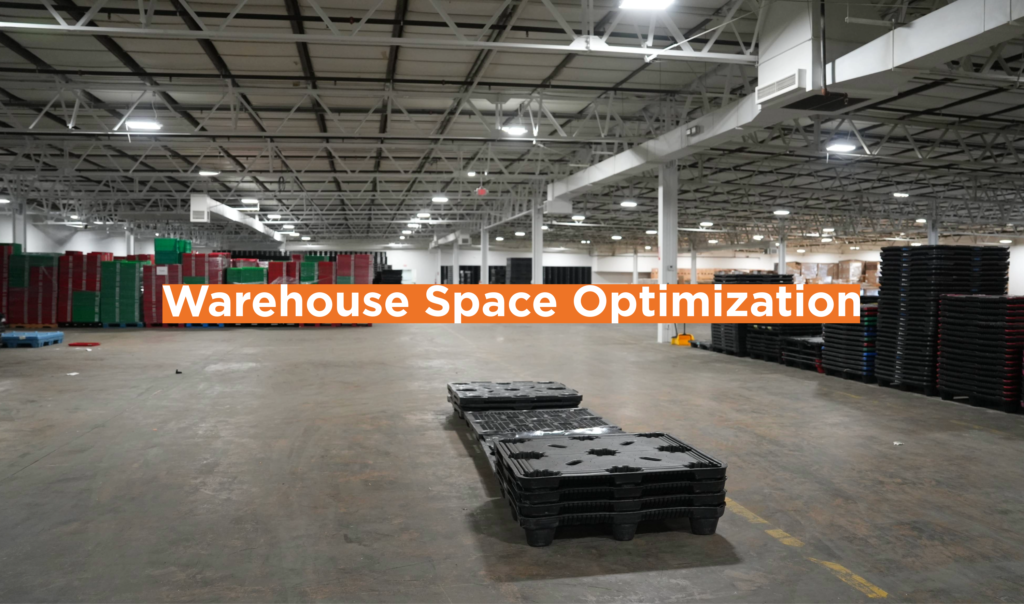
Warehouse space in the United States is expensive and increasingly difficult to expand. As facilities push for higher throughput, floor space lost to pallet storage becomes a visible inefficiency.
In 2026, many logistics teams are using plastic pallets, particularly nestable designs, to reduce congestion and reclaim usable warehouse space.
The hidden cost of pallet storage
Empty pallets take up valuable square footage. In busy facilities, stacks of unused pallets compete with staging lanes, pick faces, and dock access.
Wood pallets stack inconsistently due to warping and damage, which limits safe stack height and increases floor space usage.
How plastic pallets improve space efficiency
Plastic pallets are designed for predictable stacking and nesting. Nestable plastic pallets allow empty pallets to fit inside one another, reducing the storage footprint significantly.
This improves:
- Dock area flow
- Trailer loading efficiency
- Return logistics cube utilization
- Safety around pallet stacks
Real warehouse congestion scenario
In a multi-shift distribution center, empty pallets accumulate quickly during peak shipping windows. When floor space is limited, congestion slows forklift traffic and increases accident risk.
Facilities that convert outbound lanes to nestable plastic pallets often see immediate improvements in dock flow and aisle clearance.
Space savings beyond the warehouse
Space efficiency does not stop at the building. Return transportation costs are affected by pallet cube.
Nestable plastic pallets reduce the number of trailers required to move empty pallets back to suppliers or pooling locations, lowering transportation costs.
Measuring space efficiency gains
To evaluate impact, warehouses often track:
- Square footage dedicated to pallet storage
- Number of pallets per stack
- Trailer utilization for empty pallet returns
- Dock congestion incidents
When pallet storage shrinks, usable space increases without construction.
Choosing the right pallet for space optimization
Key considerations include:
- Nesting ratio
- Load rating compatibility
- Fork entry design
- Compatibility with existing handling equipment
Not all plastic pallets are designed to nest, so selection matters.
Final takeaway
Warehouse space constraints are a reality in US logistics. Plastic pallets, especially nestable designs, help reduce congestion and unlock space that can be used for revenue-generating activity. In 2026, space efficiency is one of the strongest operational arguments for plastic pallets.