Many pallet failures in US warehouses occur not because the pallet is defective, but because it is used incorrectly. Understanding pallet load ratings is essential for selecting plastic pallets that perform safely and reliably.
In 2026, warehouse managers are increasingly focused on matching pallet specifications to real operating conditions.
The three core load ratings
Plastic pallets are rated using three distinct load categories.
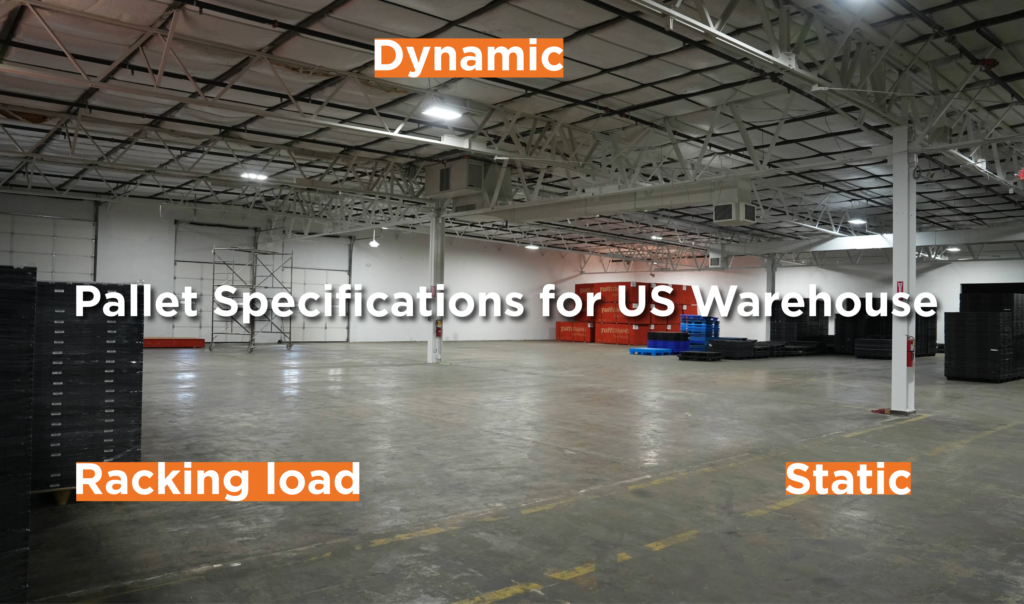
Static load
The maximum weight a pallet can support when it is stationary on the floor.
Dynamic load
The maximum weight a pallet can support while being lifted or moved by a forklift or pallet jack.
Racking load
The maximum weight a pallet can support while resting on rack beams without floor support.
These ratings are not interchangeable.
Common real-world failure scenario
A pallet may perform well on the floor under a heavy load but deflect when placed in racking. This occurs when racking load capacity is lower than the applied load.
Warehouses that assume static ratings apply everywhere increase the risk of deflection, instability, and rack damage.
Why plastic pallets publish clearer specifications
Plastic pallets are engineered products with published performance ratings. These ratings help operations teams:
- Select pallets suited for racking
- Avoid overloading
- Maintain safety margins
- Improve consistency
Wood pallets rarely provide reliable load ratings due to variability.
Matching pallets to warehouse conditions
Before selecting pallets, facilities should assess:
- Storage method (floor, rack, conveyor)
- Maximum unit load weight
- Handling equipment
- Temperature environment
Plastic pallets should be selected based on the most demanding condition they will encounter.
Inspection and ongoing use
Even durable pallets require monitoring. Best practices include:
- Routine inspection
- Removal of damaged pallets
- Training staff on load limits
- Avoiding misuse across zones
Safety agencies emphasize inspection and proper load management as key elements of material handling safety.
Real US warehouse example
In selective rack environments, pallets frequently span beams for extended periods. Using plastic pallets rated for racking reduces deflection risk and improves long-term rack safety.
Final takeaway
Understanding static, dynamic, and racking loads is critical to safe pallet use. Plastic pallets provide clearer specifications that help US warehouses reduce failures and operate with confidence in 2026.