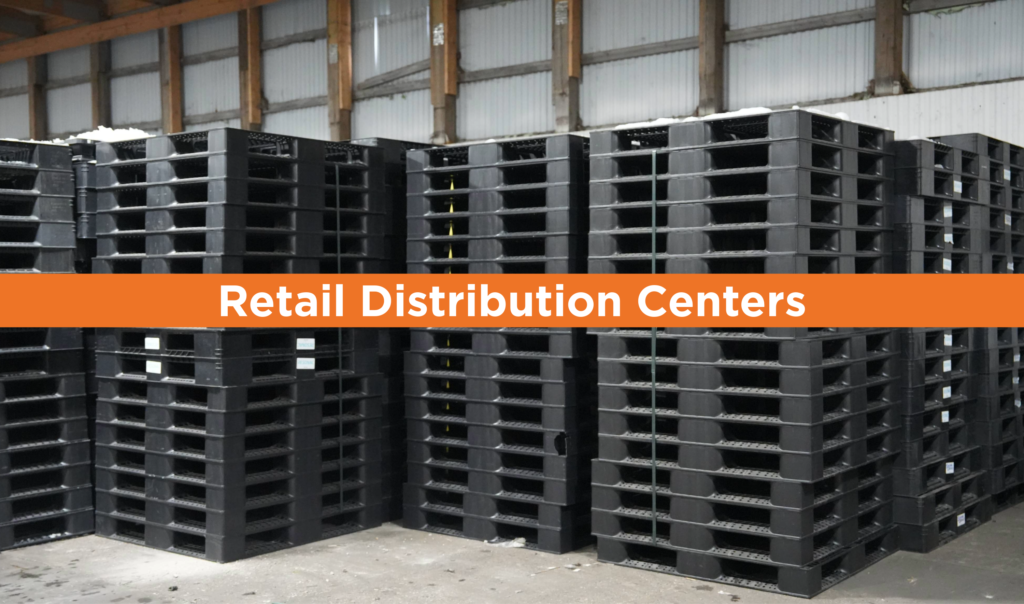
Retail distribution centers in the United States operate on tight schedules and strict compliance rules. Missed appointments, damaged product, or inconsistent pallet quality often result in chargebacks and delayed shipments.
In 2026, many retail-focused logistics operations are reevaluating pallet standards as part of broader efforts to reduce operational friction. Plastic pallets are increasingly used to improve consistency and reliability across inbound and outbound flows.
Why retail DCs are sensitive to pallet issues
Retail DCs are built around speed and predictability. Inbound trailers are scheduled down to narrow appointment windows. Outbound store replenishment depends on precise loading sequences.
When pallets fail, consequences escalate quickly:
- Re-palletizing delays unload times
- Damaged cases trigger chargebacks
- Unstable loads increase dock congestion
- Cleanup slows subsequent appointments
Even minor pallet issues can cascade into missed dock slots.
The consistency advantage of plastic pallets
Plastic pallets offer consistent dimensions and load-bearing characteristics. This consistency supports:
- Faster unloading
- Predictable stacking
- Stable unit loads
- Reduced manual adjustments
Retail DCs benefit when every pallet entering the building behaves the same way.
Damage reduction in high-volume environments
Product damage in retail environments often originates at the pallet level. Broken boards, uneven decks, or protruding nails compromise load integrity.
Plastic pallets provide smooth, uniform surfaces that reduce packaging tears and load shifts during handling.
Dock efficiency and throughput
Dock congestion is a measurable cost. Pallet rework extends dwell time, which disrupts dock flow and increases labor pressure.
Facilities that standardize pallet inputs often experience:
- Shorter unload times
- Fewer manual interventions
- More predictable labor planning
Real US retail logistics scenario
In regional retail distribution, vendors often ship on mixed pallet types. When inbound pallets vary widely in quality, DCs spend extra time stabilizing loads.
Standardizing shipments on plastic pallets simplifies receiving and reduces variability across vendors.
Metrics retail DCs should track
To evaluate pallet performance, retail DCs commonly monitor:
- Re-palletizing incidents
- Damage-related chargebacks
- Dock dwell time per trailer
- Cleanup labor hours
Improvements in these metrics often correlate with pallet standardization.
Final takeaway
Retail distribution centers thrive on consistency. Plastic pallets reduce variability, protect product, and support faster dock operations. In 2026, pallet standardization is a practical lever for reducing chargebacks and delays in US retail logistics.