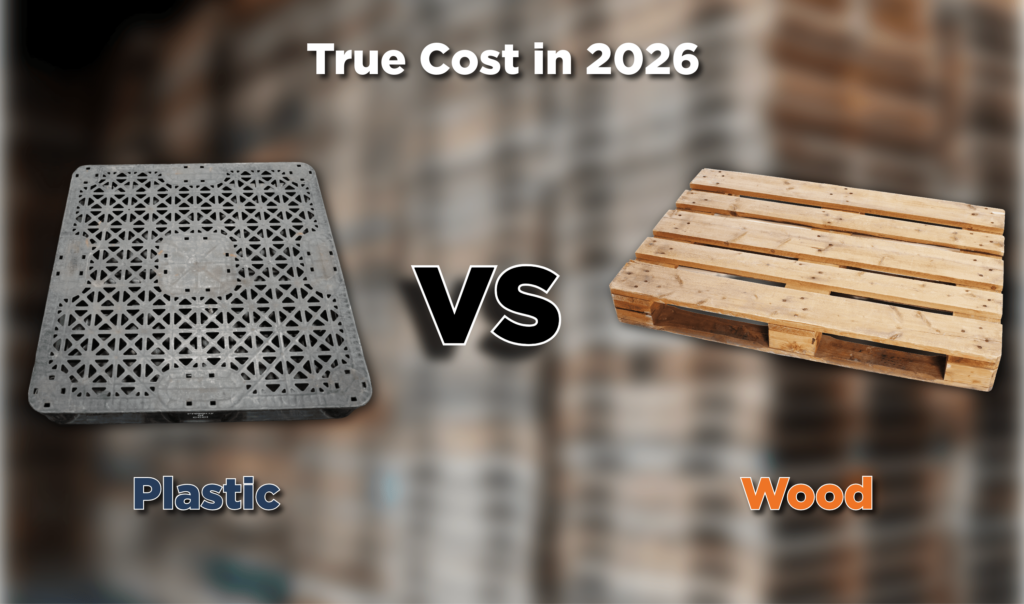
In 2026, the debate between plastic pallets and wood pallets is more relevant than ever. With rising labor costs, stricter health regulations, and global supply chain pressures, companies are reevaluating whether wood pallets are still worth the hidden costs.
This blog breaks down the real differences between wood and plastic pallets in durability, hygiene, cost, sustainability, and operational performance.
Durability Comparison
Wood Pallets
- Splinter
- Break easily
- Absorb moisture
- Nails fall out
- Boards crack under load
Plastic Pallets
- Do not break easily
- Water and chemical resistant
- No nails
- Consistent quality every time
- 10 to 15 times longer lifespan than wood
Plastic outperforms wood in every major durability category.
Cost Comparison in 2026
Companies often compare the upfront cost only. But the real cost is what matters.
Cost Per Trip
- Wood: 1 to 2 trips
- Plastic: 200 to 500 trips
Plastic pallets drastically reduce replacement and repair costs.
Hygiene and Cleanliness
Plastic pallets dominate industries with strict sanitation requirements.
Plastic advantages
- No mold
- No bacteria absorption
- No moisture
- Fully washable
Wood pallets fail these standards and often cause rejected shipments.
Environmental Impact
Wood pallets seem natural, but most break and end up in dumpsters.
Plastic pallets:
- Are fully recyclable
- Are often made from recycled material
- Produce less waste over their lifespan
A long lasting plastic pallet is far more sustainable than multiple broken wood pallets.
Final Verdict
Wood pallets still serve one way shipments, but any operation with repeated pallet usage will benefit more from plastic. Plastic pallets win in durability, hygiene, compliance, efficiency, and long term cost savings.